Timothy Lightoler (1727 – 1769) Architect to Both Gentleman and Farmer
Introducing Timothy Lightoler
The second of three sons born to joiner Thomas Lightoler in Walton-on-Dale in Lancashire, Timothy Lightoler trained from an early age as a carpenter and joiner. His journey from these humble origins to his later status as “the gentleman and farmer’s architect” is a fascinating story.
Georgian craftsmen often doubled as architects; Timothy worked on many architectural projects during his lifetime, often in earlier years with his brother Thomas. His first documented work was carried out with Thomas at Warwick Castle in 1750, remodelling the castle chapel to the designs of Daniel Garrett.
Lightoler the Author
In 1757 Lightoler was commissioned to complete The Modern Builder’s Assistant by publisher Robert Sayer. In 1762, he produced The Gentleman and Farmer’s Architect with twenty-five plates; it sold well, with two further editions released in 1764 and 1774. This collection of designs for parsonages, farmhouses and farm buildings were both practical and ornamental.
Lightoler the Architect
During the 1760s Lightoler developed a considerable practice as an architect. He was engaged on five houses, six churches and five industrial projects. His most important works were Platt Hall, the Octagon Chapel at Bath and Bidston Hall in Cheshire. He designed the churches of St Paul and St John in Liverpool, both domed buildings of considerable merit.
Lightoler at Burton Constable
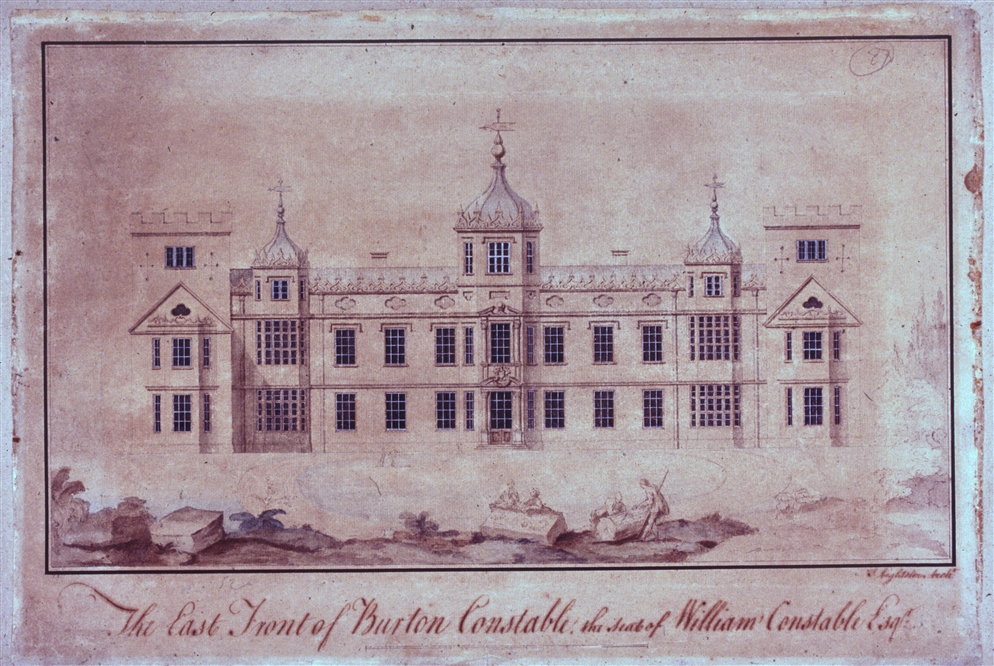
In 1746 William Constable inherited Burton Constable. At Burton Constable, Lightoler’s work in the Great Hall is remarkable for the introduction of Jacobethan motifs, an unusual style at this time. The Architect-Designer seems to have been a favourite with William, with no fewer than 41 designs for varied commissions. These drawings show intricate ceilings, pedestals, doorways, chimneypieces and gardens – and of course Lightoler’s most ambitious project of all on the site, the classical Palladian stable block.
Building Burton Constable’s Stables
Lightoler was at the height of his career when he designed the grand Palladian stable block for William Constable. William very likely chose Lightoler’s plans because of the architect’s adaptability and his ability to design in the Palladian and New Classical style. Lightoler died in 1769, before the stable block was completed, and was buried in the graveyard of the prestigious church of St Paul, Liverpool.
Thomas Atkinson (1729-1798) of York was commissioned to complete the stable block. Atkinson interestingly converted to Catholicism in order to obtain contracts from Catholic gentry, a path which Lightoler never seems to have resorted to.