The Many Lives of a Religious Window
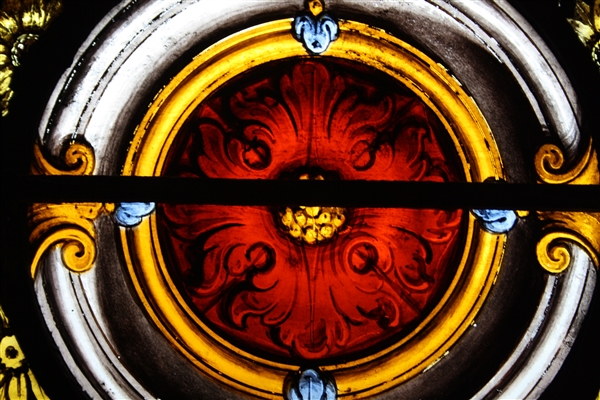
The stained glass in Burton Constable’s chapel has proved something of a mystery for years. With its many repairs, unfamiliar heraldry and unknown origins, it proved a puzzle for University of York student Iona Hart when she began her research on the window’s varied history.
One of only two stained glass windows in the entirety of Burton Constable, the chapel window has been something of a mystery for years. Brought across from the family’s home of Tixall in Staffordshire in the mid-1800s, it was placed in the Chapel following Catholic emancipation.
About the Window
The Chapel window has four main sections (lights) and eight small sections across the top (tracery). Each of the main lights depicts a different figure:
- A woman kneeling in prayer with an angel carrying her heraldic shield above her
- The Throne of Mercy – God the Father supporting Christ crucified on the cross
- The Pietà – Mary, mother of Jesus, holding Christ’s crucified body
- A mirror image of panel number 1 but with different heraldry
Early Days in Childrey
The Chapel Window started its life at the other end of the country, over 300 years before it found its home at Burton Constable Hall. In 1526, William Fettiplace, a wealthy and influential landowner in Berkshire and Oxfordshire, founded a chantry chapel in his local parish church, St Mary the Virgin, in Childrey.
The Fettiplace Family & Civil War Strife
The most likely reason for the losses would be damage inflicted intentionally during the English Civil Wars. King Charles I stayed as a guest in the Fettiplace family manor in April 1644. As well known recusants who supported the Catholic faith, the family naturally supported the Royalist cause. During the Civil War, the Childrey chapel was victim to iconoclasm – the destruction of religious imagery as being heretical.
Melding Old and New
Between the 1720s and 1761, William Price the Younger seamlessly incorporated the original medieval fragments into the version of the window we see today. After 1761, the window goes missing from records until it was installed in Tixall Chapel by the Clifford Constables in 1828.
The Window’s Final Journey
Due to some rather questionable financial mismanagement, Tixall Hall and its chapel were sold in 1845. However, a clause in its sale stipulated that all the stained glass in the chapel would move with the family to their new home, Burton Constable Hall.
So, in 1844, the Chapel Window was removed from Tixall Chapel and travelled almost 140 miles to Burton Constable Hall, where it has remained ever since.
The Power of the Past in the Present
The Chapel Window bears the shields of a very prominent, royalist yet recusant family whose chantry chapel was devastated by Parliamentarian forces. By visually aligning their own heraldry alongside those of the Fettiplace family, the Clifford-Constables were declaring that they shared the same undying loyalty to the Catholic religion as those who endured persecution during the Reformation.